
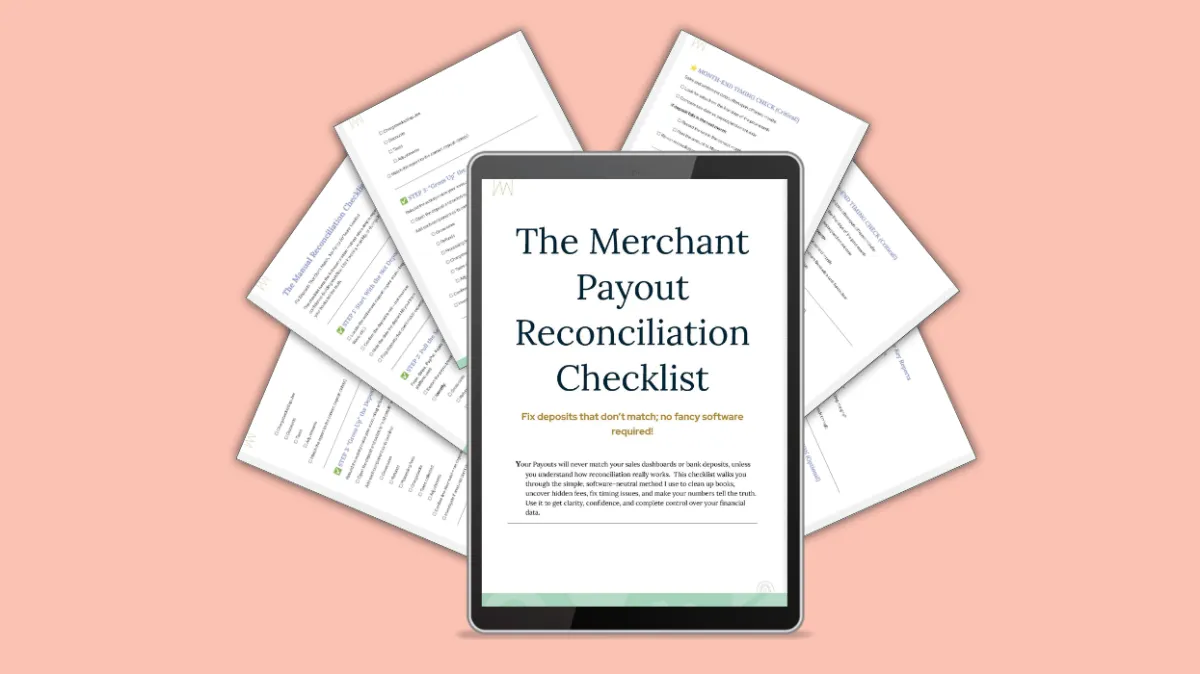
Behind the Scenes: How I Reconcile Stripe, PayPal & Kajabi
Behind the Scenes: How I Reconcile Stripe, PayPal & Kajabi (So Your Numbers Finally Make Sense)
By Lisa — Your Financial Partner, Not Just Your Bookkeeper
If you’ve ever opened your accounting software, checked your Stripe payouts, then looked at your bank deposits and thought…
“None of these match; what is actually happening??”
…you’re not alone.
Every coach, creator, and agency owner eventually hits the same wall:
👉 Deposits are not your revenue.
👉 Your payouts will never match your sales dashboards.
👉 And unless you reconcile fees, refunds, and charge-backs correctly, your financials will always lie to you.
Today, I’m taking you behind the scenes into exactly how I reconcile your payment platforms, in a plain English, human way, so you can finally trust what your numbers say.
The Moment Everyone Realizes: “My Deposits Don’t Equal My Sales.”
Most digital entrepreneurs run their business from two places:
💸 Stripe balance
💸 Bank balance
And while that feels simple, it’s one of the quickest ways to get misled by your numbers.
Here’s why your deposits rarely match your sales:
Stripe removes fees before payouts
PayPal batches deposits differently
Kajabi/ThriveCart show gross sales, not net deposits
Refunds hit on different days
Charge-backs pull from previous deposits
Platforms settle on their own time-line
So if you try to compare:
Stripe “sales” → to → your bank deposit
…it will never match.
This is exactly why reconciliation exists.
Behind the Scenes: My Manual Reconciliation Method (Software-Neutral)
This works in Xero, QBO, Wave, or anything you use; even Excel.
Reconciliation isn’t “matching the deposit.”
It’s rebuilding the story behind the deposit so your numbers tell the truth.
Here’s how I do it:
STEP 1: Start With the Net Deposit in Your Bank Feed
That mysterious number in your bank feed?
That’s not your revenue.
It’s:
gross sales
minus fees
minus refunds
minus charge-backs
minus adjustments
minus taxes
plus/minus random platform quirks
Deposits are the result, not the revenue.
STEP 2: Get the Settlement Report From the Source
Next, I pull the real data from wherever the money came from:
Stripe
PayPal
Kajabi Pay
Shopify Payments
ThriveCart
Amazon Seller payouts
That settlement report shows:
gross sales
refunds
discounts
fees
chargebacks
taxes
adjustments
This is your source of truth — not your bank, not your dashboard.
STEP 3: “Gross Up” the Deposit in Your Books
This is where the magic happens…
…and where most people make mistakes.
Inside your accounting software, I open the deposit and rebuild the activity line by line:
Gross sales
Refunds
Processing fees
Charge-backs
Taxes
Adjustments
Each line is a breadcrumb that leads back to reality.
The total must match the deposit exactly.
⭐ REALITY CHECK: Month-End Timing Trips Up Everyone
Settlement reports include two dates:
Sale date
Settlement date
They often fall in different months.
Example:
A sale on March 30 may not hit your bank until April 2.
Revenue belongs in March, not April.
Here’s how I handle it:
I record the sale in the correct month
I put the “money coming soon” into a Merchant Receivable account
If your numbers are “close but not quite,”
➡️ this timing issue is almost always the culprit.
STEP 4: Categorize With Intention (Not Auto-Rules)
This is where messy books turn into meaningful insights:
Revenue → Sales
Refunds → Contra Revenue
Fees → Merchant Fees
Charge-backs → Charge-backs
Taxes → Tax Liability Accounts
Stop letting your accounting software guess. You’re running a business, not a carnival game.
STEP 5 — Run the Report, Ask the Hard Questions
Once everything is categorized, I pull the P&L and ask:
Does revenue reflect actual sales activity?
Are refunds and fees pulling down profit accurately?
Do deposits tie out to the bank?
Is the story your books tell the truth or a fairy tale?
If something feels “off,” your instinct is usually right.
Follow the gut → then follow the numbers.
BUT WHAT ABOUT A2X?
Tools like A2X automate this whole process, and they’re amazing when used correctly.
I recommend automation when:
You sell across multiple platforms
Transaction volume is high
Month-end takes forever
You need SKU or product-level reporting
But here’s the honest truth:
👉 For most coaches, creators, and small agencies, automation is overkill.
👉 It eats profit, adds complexity, and creates more confusion than clarity.
The goal isn’t “fancy.” The goal is accurate, actionable data.
Why This Actually Matters
Reconciliation isn’t busywork. It’s data hygiene for your brain.
It tells you:
which offers are profitable
where cash is leaking
whether that “big month” actually mattered
how much you can truly pay yourself
whether your launch ROI is truth or fantasy
👉 Clean books = confident CEO decisions.
👉 Reconciliation is how you lead, not just track.
Feeling Lost in Deposits That Don’t Match?
You are not bad with numbers. You were just never taught the method.
If you’re tired of guessing…
If your reports feel “close but not quite”…
If deposits don’t match the story your platforms tell…
🧼 Let’s clean it up.
Schedule a call, and we’ll rebuild your numbers from the inside out.
No shame. No judgment. Just clarity, and a system that works.